Difference between Samsung A15 and A15 5G
Publicado por Maria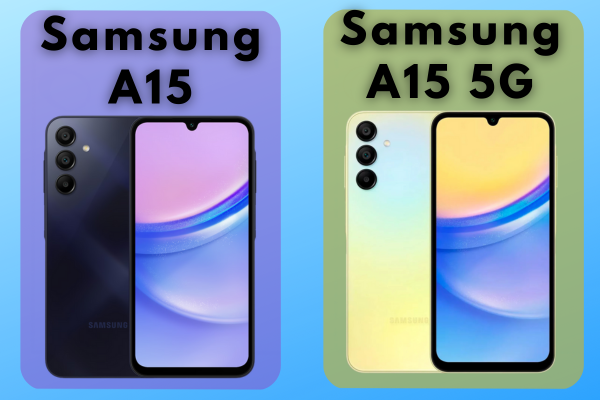
Difference between Samsung A15 and A15 5G
Hello everyone, iLevante friends! Today we are diving into the depths of two of the most popular mid-range devices at the moment: the Samsung Galaxy A15 (4G version) and its older sibling, the Samsung Galaxy A15 5G.
We know that, at first glance, they look like identical twins. If you have one in your hand and the screen has broken, or you need to replace the battery, it's very likely you'll ask yourself: Are they the same parts? Is it worth paying more for 5G? What issues are common? In this article, we will dissect each component, not only to help you decide which to buy, but also to help you identify which spare parts you'll need if you decide to give your phone a second life.
Design and Screen: Twins separated at birth
Let's start with what our customers ask us most in the spare parts shop: the screen. Here we have great news for the average user and repair technicians. Both models feature exactly the same panel.

We are talking about a 6.5-inch Super AMOLED screen with a refresh rate of 90Hz. This is a huge quality leap compared to previous generations that used LCD panels. Blacks are pure and brightness reaches up to 800 nits, thanks to Samsung's Vision Booster technology.
What does this mean for repairs? If the glass breaks or the display stops working (that feared "black screen"), the screen replacement is usually compatible with both versions (SM-A155 and SM-A156). This makes it much easier to find the part on our website, as you won't have to go crazy searching for a specific reference for 4G or 5G when it comes to the front module.
As for the chassis, both are made of plastic (what Samsung calls "Glastic"). It's sturdy, but the back cover is a magnet for scratches. If you're going to replace the battery, you might as well replace the back cover too to make the phone look like new.
Comparison Table: Samsung A15 vs A15 5G
Here?s the technical breakdown. Pay close attention to the processor and connectivity, as these are the real differentiating factors.
| Feature | Samsung Galaxy A15 (4G) | Samsung Galaxy A15 5G |
|---|---|---|
| Technical Model | SM-A155 | SM-A156 |
| Screen | 6.5" Super AMOLED, 90Hz, 800 nits | 6.5" Super AMOLED, 90Hz, 800 nits |
| Processor (CPU) | MediaTek Helio G99 (6nm) | MediaTek Dimensity 6100+ (6nm) |
| RAM | 4GB / 6GB / 8GB | 4GB / 6GB / 8GB |
| Storage | 128GB / 256GB (Expandable via microSD) | 128GB / 256GB (Expandable via microSD) |
| Rear Cameras | Main 50MP + 5MP UGA + 2MP Macro | Main 50MP + 5MP UGA + 2MP Macro |
| Front Camera | 13 MP | 13 MP |
| Battery | 5000 mAh (25W Fast Charging) | 5000 mAh (25W Fast Charging) |
| Connectivity | 4G LTE, Bluetooth 5.3, NFC | 5G Sub6, Bluetooth 5.3, NFC |
| Dimensions and Weight | 160.1 x 76.8 x 8.4 mm (200g) | 160.1 x 76.8 x 8.4 mm (200g) |
| Operating System | Android 14 with One UI 6 | Android 14 with One UI 6 |
Analysis of the technical differences
As you can see in the table, the core difference lies in the processor. The A15 4G uses the well-known Helio G99, a quite reliable chip that we?ve seen in many mid-low-range phones, offering excellent performance for daily tasks and light gaming.
On the other hand, the A15 5G is equipped with the Dimensity 6100+. Is it much more powerful? In terms of raw CPU power, they are quite similar. The critical difference is the modem. The Dimensity supports 5G networks, ensuring higher download speeds and lower latency if you have a compatible plan. For repairs, this is crucial: the motherboard is NOT interchangeable. If your phone gets water damaged and the motherboard breaks, you must ensure to buy the exact one for your model (SM-A155 or SM-A156), as the antennas and internal chip arrangement vary slightly.
Strengths of each model
When choosing or recommending one, here are their winning cards:
Best of the Samsung Galaxy A15 (4G):
- ? Price: It?s significantly cheaper while offering the same visual experience (screen) and battery life.
- ? Stability: The Helio G99 processor is very well optimized and tends to heat up less, which protects battery life in the long term.
- ?? Spare parts availability: As a global best-seller, finding spare parts is very easy.
Best of the Samsung Galaxy A15 5G:
- ? Connectivity for the future: 5G is the standard. If you plan to keep the phone for more than 2 years, this is the logical choice.
- ? Streaming fluidity: Thanks to the 5G network, consuming high-quality multimedia content without WiFi is much smoother.
- ? Resale value: 5G phones depreciate less in the second-hand market.
Common Issues and Repair Guide
At iLevante, we have years of experience in identifying what "kills" phones. Although the A15 series is robust, it?s not without issues. Here are the most common faults users report and the parts usually needed.
1. Charging port failure (Slow or no charging)
This is the king of problems in the mid-range. Often, users report the cable "wiggles" or that the phone only charges if pressed at a certain angle. While sometimes a deep clean of the USB-C port is enough, often the internal connector is desoldered or worn out.
The solution: Typically, you replace the charging sub-board (the lower circuit where the USB port and microphone are). ?? Note: Although they look identical, the sub-boards for the 4G and 5G models may have different FPC connectors or antenna lines. Always verify your phone's version before buying this spare part.
2. AMOLED Screen Break
Having a Super AMOLED screen means the panel is thinner and offers better image quality but is more sensitive to direct impacts than old LCDs. A sharp hit might not break the outer glass but could damage the internal panel, causing purple spots to spread or a completely black screen, even if the phone vibrates and sounds.
The solution: Replace the full module (LCD + Digitizer). We recommend buying the original Samsung Service Pack, including the frame, as manually attaching just the glass on AMOLED screens is a highly complex job reserved for professionals with lamination machinery.
3. Battery Degradation
Although 5000 mAh is a massive capacity, intensive use and 25W fast charging can degrade the chemical cell after around 500 charge cycles (approx. 1.5 - 2 years). Symptoms are clear: the phone turns off at 15% or 20%, or discharges very quickly.

The solution: Battery replacement. The usual model is reference EB-BA156ABY. It?s a medium difficulty repair since it requires removing the back cover with heat and taking off the motherboard shield.
4. Side fingerprint sensor
The fingerprint sensor is located on the power button. We?ve noticed this button can stop responding or fail fingerprint readings due to finger grease or moisture.
The solution: The power/fingerprint flex is replaceable. It's an affordable piece, but requires dismantling the phone's back and intermediate frame.
5. Software and Bootloops
Occasionally, after a One UI update, the A15 (especially the 5G version) might freeze or restart repeatedly. This is not always hardware failure. Before buying parts, try entering Recovery mode and performing a "Wipe Cache Partition." If the problem persists, it could be a fault in the motherboard memory, a much more expensive and complex repair often requiring micro-soldering.
Which is easier to maintain?
Both the Samsung Galaxy A15 and A15 5G are excellent devices in their price range. From a reparability point of view, both score highly. Samsung has maintained a modular internal architecture, making screen, battery, and charging port replacements easier.
If you?re looking for spare parts on iLevante, remember this golden rule: The screen and battery are usually universal between the 4G and 5G, but the motherboard and auxiliary charging board must be specific to your model (SM-A155 or SM-A156).
We hope this guide has cleared your doubts. See you in the next analysis!